

What is White Coat Hypertension?
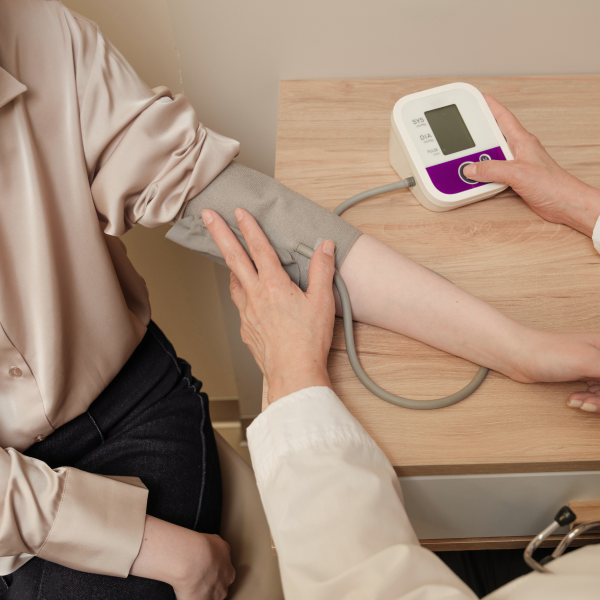
The White Coat Phenomenon refers to the body’s response during a blood pressure (BP) measurement in a clinical setting (office), resulting in an elevated reading compared with BP measured outside the clinic or at home. When this pattern persists in untreated patients, it is defined as White Coat Hypertension (WCH), also known as White Coat Syndrome.
Anxiety associated with hospitals and other clinical environments is commonly linked to this sudden variation in results [1]. The phenomenon is named after the white coats traditionally worn by medical staff.
How is White Coat Hypertension Diagnosed?
To diagnose a patient with suspected WCH, the physician must first rule out sustained hypertension. This requires comparing office BP readings with measurements taken outside the clinical setting. This is typically achieved using 24-hour ambulatory blood pressure monitoring (ABPM) or home blood pressure monitoring (HBPM).
According to the 2018 European Society of Cardiology (ESC) Guidelines, White Coat Hypertension is defined as:
- Elevated Office blood pressure (≥140/90 mmHg) at repeated visits
- Normal out-of-office measurements. Specifically, this includes
- an average 24-hour ambulatory blood pressure of <130/80 mmHg
- or home blood pressure readings of <135/85 mmHg, in individuals not receiving blood pressure treatment (antihypertensives)
- …in patients not receiving antihypertensive therapies
What Causes WCH and Who is More at Risk?
The white coat effect can be likened to a “fight or flight” response triggered by the clinical environment, health-related anxieties, or previous negative experiences. This response is driven by the release of adrenaline, which causes blood vessel constriction and an increased heart rate, ultimately leading to elevated blood pressure readings.
The prevalence of WCH varies between studies, but the 2018 ESC estimates suggest it may account for up to 30–40% of office-based elevated BP readings. While anyone can experience the white coat effect, certain demographics appear to be more vulnerable:
- Females
- Non-smokers
- Older age
Following diagnosis, patients are typically monitored over time to detect any progression toward sustained hypertension. Lifestyle measures and periodic out-of-office blood pressure monitoring are often recommended.
Is White Coat Hypertension Dangerous?
While white coat hypertension is generally associated with a lower cardiovascular risk than sustained hypertension, it is not considered as benign as once believed. Some individuals may progress to sustained hypertension over time, particularly in the presence of additional cardiovascular risk factors [2].
The Clinical Consequences of Misclassification
Misclassification of blood pressure status can occur in up to 30-50% of all hypertensive cases [3, 4]. The two primary causes are White Coat Hypertension and Masked Hypertension.
Masked Hypertension is the opposite of WCH. It occurs when untreated patients present with normal BP readings in the office but elevated BP levels at home or on ABPM.
Misclassifying WCH as sustained hypertension can lead to significant clinical and patient-level consequences. Antihypertensive therapy may be initiated unnecessarily, potentially resulting in lifelong medication use and exposure to side effects such as dizziness, hypotension, and electrolyte imbalances.
Accurate classification of BP status is essential to ensure appropriate treatment and to avoid unnecessary or harmful interventions.
White Coat Effect
The measured increase in blood pressure when in a clinical setting compared with outside measurements
Occurs in normotensive individuals, patients with WCH, treated and untreated hypertensive patients
White Coat Hypertension
A condition in which repeated office blood pressure readings are elevated office blood pressure is elevated (≥ 140/90 mmHg), and reads normal, confirmed by ABPM or Home BP), and reads normal outside, confirmed by ABPM or Home BP
Occurs in untreated individuals
White Coat Uncontrolled Hypertension
A condition in which repeated office blood pressure measurements remain elevated (≥ 140/90 mmHg), and outside readings are controlled and within target range
Occurs in patients receiving hypertensive treatment
Masked Hypertension
A condition in which office blood pressure is normal, but outside is elevated on ABPM and Home monitoring
Occurs in untreated individuals
The Challenge of Relying on Office BP alone
Identifying WCH using office BP measurements alone is possible but often requires significant time and effort from both clinical staff and patients. One study observed that some individuals with mild BP elevation experienced an average decrease of 15/7 mmHg between their first and third office readings.
Frequent visits may gradually diminish the physiological response to the clinical environment; however, this does not occur in all patients. Some individuals did not achieve a classifiable BP result until their sixth visit.
While office BP monitoring can be used to assess suspected white coat syndrome, ambulatory BP monitoring can simplify the process, provide more comprehensive data, and significantly reduce time burdens.
ABPM as the Gold Standard
Out-of-office blood pressure monitoring is essential for obtaining an accurate representation of a patient’s average BP. Home BP monitoring allows measurements in a familiar, quiet environment with fewer stress-related influences, making it valuable for daytime assessment.
However, 24-hour ambulatory blood pressure monitoring (ABPM) provides additional insight by recording BP at regular intervals throughout both day and night. ABPM captures important nocturnal patterns, including “nocturnal dipping”, the body’s normal reduction in BP during sleep.
ABPM may also identify “non-dipping” or “reverse dipping” patterns, where BP fails to decrease or increases during sleep. These patterns indicate disrupted circadian regulation and are associated with an increased risk of cardiovascular events [5].
Blood pressure data capture systems, such as dabl’s, can support clinicians by securely collecting, validating, and reviewing ambulatory blood pressure data, helping to improve diagnostic confidence.
This content is for informational purposes only and does not constitute medical advice. Clinical decisions should be made by qualified healthcare professionals in accordance with local guidelines.
References
- What is white coat syndrome? (2025) Cleveland Clinic. Available at: https://my.clevelandclinic.org/health/diseases/23989-white-coat-syndrome (Accessed: 23 January 2026).
- Huang Y, Huang W, Mai W, Cai X, An D, Liu Z, Huang H, Zeng J, Hu Y, Xu D. White-coat hypertension is a risk factor for cardiovascular diseases and total mortality. J Hypertens. 2017 Apr;35(4):677-688. doi: 10.1097/HJH.0000000000001226. PMID: 28253216; PMCID: PMC5338886.
- Scheppach JB, Raff U, Toncar S, Ritter C, Klink T, Störk S, Wanner C, Schlieper G, Saritas T, Reinartz SD, Floege J, Janka R, Uder M, Schmieder RE, Eckardt KU, Schneider MP. Blood Pressure Pattern and Target Organ Damage in Patients With Chronic Kidney Disease. Hypertension. 2018 Oct;72(4):929-936. doi: 10.1161/HYPERTENSIONAHA.118.11608. PMID: 30354716.
Hundemer, G.L., Akbari, A., Buh, A., Biyani, N., Mahbub, S., Salman, M., Brown, P.A., Knoll, G.A., Sood, M.M., Hiremath, S. and Ruzicka, M. (2025). Misclassification of Hypertension Status According to Office Blood Pressure vs 24-Hour Ambulatory Blood Pressure Monitoring. CJC Open, [online] 7(4), pp.508–515. doi:https://doi.org/10.1016/j.cjco.2025.01.007.
- Lempiäinen PA, Ylitalo A, Huikuri H, Kesäniemi YA, Ukkola OH. Non-dipping blood pressure pattern is associated with cardiovascular events in a 21-year follow-up study. J Hum Hypertens. 2024 May;38(5):444-451. doi: 10.1038/s41371-024-00909-2. Epub 2024 Apr 3. PMID: 38570625; PMCID: PMC11076206.
