

Introduction
Blood pressure monitoring is a vital operation in many clinical studies; however, its data can be one of the most variable and frequently unevaluable metrics in clinical research [1]. With cardiovascular complications being the leading cause of death in the world [2], ensuring the capture of valid results can quite literally be a life-or-death situation.
While some causes of variability may be subject, device or procedure related [3], some problems can specifically arise when performing manual data entry. Human error in measurement procedures and manual transcription may result in protocol deviation and intensive use of time and resources to correct and validate data [4]. Automated data capture has been proven to be successful within clinical trials [5], minimising the risk of human error.
The Problem with Manual Entry
In traditional workflows, blood pressure data can be typed into spreadsheets, written on paper, or manually entered onto an electronic document. Each step in manual entry introduces potential for human error. When performed across multiple sites, devices, staff members and subject visits, these errors can accumulate, leading to significant inconsistencies.
Human errors in transcription or measurement technique can cause minor issues like repeating the measurement but may also cause more significant issues including misdiagnosing a patient, or the exclusion of an otherwise eligible subject in clinical trials due to missing or inaccurate data [6]. In studies which include blood pressure metrics as key inclusion metrics, even small inaccuracies can have a disproportionate effect on study outcomes [7].
Additional sources of variability may arise from timing deviations and phenomena such as the white-coat effect, both of which are well known challenges in BP measurement. Automated monitoring systems help to address these issues by enforcing timing and measurement conditions as defined by the study’s protocol, and by supporting home and ABPM measurements that better reflect a participant’s true blood pressure profile [8].
What Does Automation Look Like in Blood Pressure Monitoring?
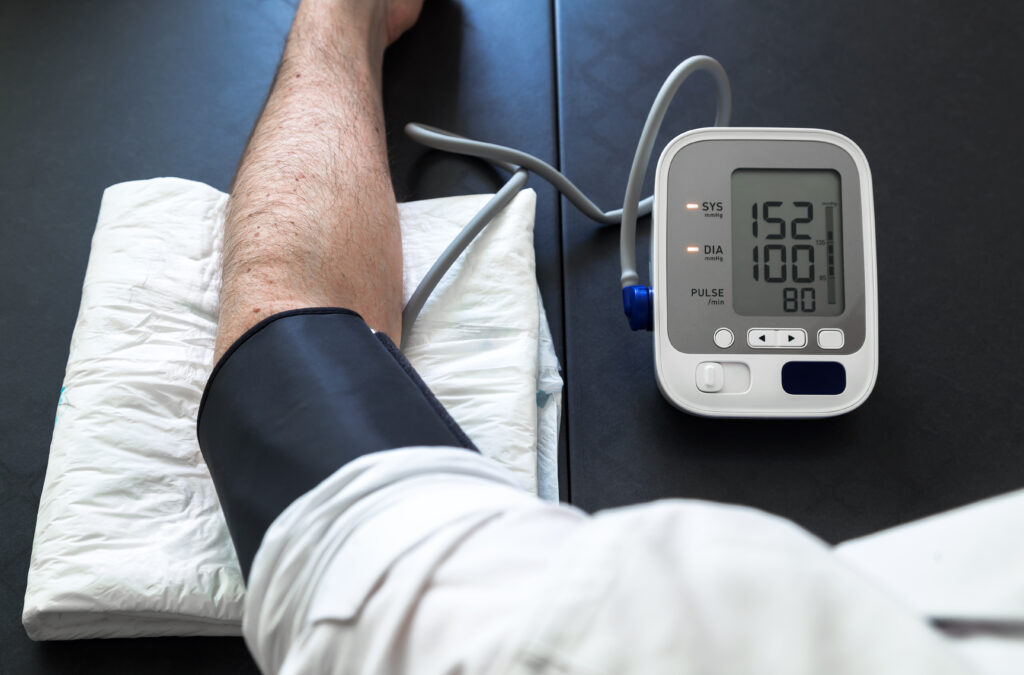
Device-to-database blood pressure monitoring involves capturing measurements directly onto devices and transferring them into a secure database, without the need for manual transcription. This automated approach allows blood pressure data to be validated at the point of upload and preserved exactly as recorded by the device. Within the database, measurement data can be evaluated and exported for presentation.
Four Benefits of a Device-to-Database BP Monitoring System
Data Security from Beginning to End
For Office, ABPM, and Home blood pressure monitoring, recorded data remains securely stored within the device until it is uploaded, ensuring that measurements are protected from loss, alteration, or transcription error during the collection period. The data also remains secure after uploading it within the database. dabl’s own software is ISO 9001:2015 certified, ensuring that data is treated with the highest level of security.
Instant Validation and Evaluable Results
Once the readings are uploaded onto the platform, they are immediately validated and available for review on the platform. This saves a significant amount of time and resources that are usually spent on transcribing and manual validation techniques [9].
Customised to Your Study’s Protocol
Automated systems also support protocol compliance by enforcing correct measurement timing, multiple readings when required, and adherence to predefined ABPM schedules. These controls are embedded in the device workflow itself, reducing reliance on manual checks or staff intervention.
Improved Patient Study Compliance
In clinical settings, patients who can gain access to their measurement results may be more likely to be adhere to their therapy schedule [10]. dabl’s system offers a detailed report of recorded therapy response that can be offered to the patient following the upload of their data to the system.
Conclusion
Accurate blood pressure measurement is at the heart of reliable clinical care, yet the errors or inconsistencies manual BP operations introduces may undermine data quality. The hidden cost of manual data entry appears as lost time, strained resources and staff, and potential protocol deviations.
Automated device-to-data systems address these challenges directly, by removing manual data handling by capturing and preserving readings directly from the device, all while maintaining protocol-compliant measuring schedules.
Dabl offers the complete solution to address these challenges directly, by removing manual data handling by capturing and preserving readings directly from the device. Our device-to-database system for clinical trials, allows the safekeeping of data for all devices including Office, Home and ABPM, and our standalone software for clinical settings allows for report generation for clinicians and patients.
Contact us if you are interested in taking the essential first step toward more reliable, efficient, and impactful BP data for your clinical studies.
References
[1] Hwang, Kevin O., et al. “Barriers to Accurate Blood Pressure Measurement in the Medical Office.” Journal of Primary Care & Community Health, vol. 9, Jan. 2018, p. 215013271881692, dx.doi.org/10.1177%2F2150132718816929, https://doi.org/10.1177/2150132718816929
[2] World Health Organisation. “The Top 10 Causes of Death.” World Health Organisation, 7 Aug. 2024, www.who.int/news-room/fact-sheets/detail/the-top-10-causes-of-death [Accessed: 19/12/2025]
[3] Kallioinen N, Hill A, Horswill MS, Ward HE, Watson MO. Sources of inaccuracy in the measurement of adult patients’ resting blood pressure in clinical settings. Journal of Hypertension. 2017 Mar;35(3):421–41
[4] Buyse, Marc, et al. “The Impact if Data errors on the Outcome of Randomized Clinical Trials.” Clinical Trials: Journal of the Society for Clinical Trials, vol. 14, no. 5, 22 June 2017, pp. 499-506, https://journals.sagepub.com/doi/10.1177/1740774517716158
[5] Jordan, T.R., et al. “Comparison of Manual versus Automated Data COllecstion Method for an Evidence-Based Nursing Practice Study.” Applied Clinical Informatics, vol. 04, no. 01, 2013, pp 61-74, https://pmc.ncbi.nlm.nih.gov/articles/PMC3644815/
[6] Kaushal, Sandeep. “Missing Data in Clinical Trials: Pitfalls and Remedies.” International Journal of Applied and Basic Medical Research, vol. 4, no. Suppl 1, Sept. 2014, p. S6, pmc.ncbi.nlm.nih.gov/articles/PMC4181137/
[7] Sakhuja, Swati, et al. “Potential Impact of Systematic and Random Errors in Blood Pressure Measurement on the Prevalence of High Office Blood Pressure in the United States.” The Journal of Clinical Hypertension, vol. 24, no. 3, 9 Feb. 2022, pp. 263–270, https://doi.org/10.1111/jch.14418
[8] Reynolds, Kristi, et al. “The Utility of Ambulatory Blood Pressure Monitoring for Diagnosing White Coat Hypertension in Older Adults.” Current Hypertension Reports, vol. 17, no. 11, 23 Sept. 2015, https://doi.org/10.1007/s11906-015-0599-0.
[9] Goodman, Keith, et al. “Automating Data Entry from Electronic Health Record to Electronic Data Capture Using a Trusted Cloud-Based Application in Multisite Cancer Clinical Trials.” Journal of the Society for Clinical Data Management, vol. 5, no. 1, 14 Jan. 2025, pp. 1–16, www.jscdm.org/article/id/371/, https://doi.org/10.47912/jscdm.371.
[10] Marzban, Sima, et al. “Impact of Patient Engagement on Healthcare Quality: A Scoping Review.” Journal of Patient Experience, vol. 9, no. 1, 16 Sept. 2022, pp. 1–12, pmc.ncbi.nlm.nih.gov/articles/PMC9483965/, https://doi.org/10.1177/23743735221125439.
